A kitchen's weekly paperwork, from 4 to 5 person-hours to 30 minutes
A Japan-based online kitchen sends 500+ meals a week. Every Monday, orders from the website, subscriptions and a nutritionist's Excel plans become one plan.
Links
- Sanitised reference repogithub.com/arsalmurad/meals-automation-systemPublic. It calls the business "MealOps" and holds no client data.
Automation · Wix · Google Sheets · Loom handover
The problem
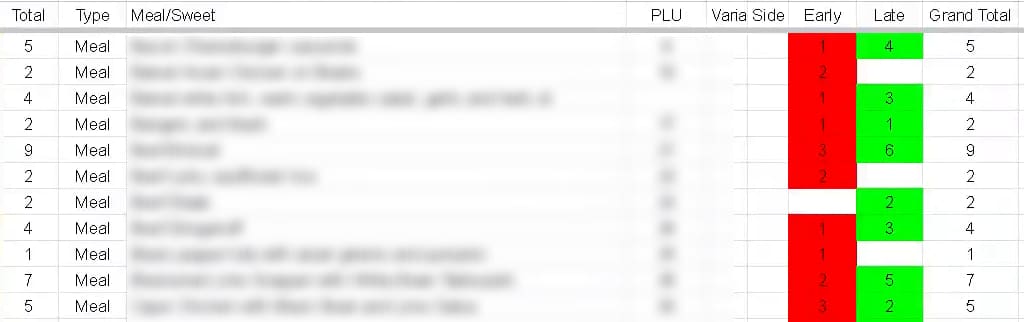
The kitchen serves about 65 subscription customers plus one-off orders, more than 500 meals a week. Every week, website orders and the nutritionist's uploaded Excel plans had to become preparation quantities, shipping schedules, Google Sheets and a PDF for each customer.
Across several people, that work took about 4 to 5 person-hours a week.
What I built
I built the system personally, on Wix, and used AI to help write the code. It runs on Monday morning, every week, and pulls the orders down from the kitchen's website. It reads the website orders and the uploaded plans, consolidates them, and produces the preparation quantities, the shipping schedules, structured Google Sheets and print-ready customer PDFs.
The compile reads five sources: Wix Pricing Plans subscriptions, Wix store subscriptions for a second recurring product line, the site's own data (meal picks, delivery preferences, menu rotations), the nutritionist's Excel uploads, and lookup tables for product codes and delivery windows. A row reaches the cooking tab only when the subscription is active and paid, the customer is identified, the delivery details are complete and the items are mapped. Everything else goes to a review queue, and nothing is silently dropped. A person fills in what is missing from a dropdown and approves the row, and a script moves it across and logs the approval. Every run also writes a log of what it fetched, matched, skipped and parked, and why.
The stack is Wix Velo, JavaScript, Google Apps Script, Google Sheets, website APIs, webhooks, Excel parsing, a PDF-generation library and a custom backend. Live since about March 2026, still in use as of July 2026. An order with no delivery day or time stops and waits for a person rather than guessing. I handed it over as a recorded Loom walkthrough, so anyone on the team can run it.
The hard part
Orders arrived three ways: from the website, from subscriptions and from the nutritionist's Excel plans. All three had to become one weekly plan. There were errors in the early weeks while the system stabilised.
The sources disagree. Subscriptions get paused mid-week, a payment fails after a plan renews, a customer submits an order and then cancels, and a renewal order can arrive with an empty buyer record. A subscription can read ACTIVE while its last payment failed, so the system works out status from dates and payment history, not from one status field. Plans are matched against a fixed list of known names rather than by pattern, so a name it does not know goes to review, not to the kitchen.
The result
From the client's handover walkthrough and my build notes, as of July 2026.
Limits. The early weeks had errors while the system stabilised. After that, no further processing errors were reported for about a month, as of July 2026. The time saved covers planning and paperwork, not cooking or shipping.
case file
Links
- Sanitised reference repogithub.com/arsalmurad/meals-automation-systemPublic. It calls the business "MealOps" and holds no client data.
How it works.
- Five sources feed one weekly compile: Wix Pricing Plans subscriptions, Wix store subscriptions, the site's own data, the nutritionist's Excel uploads and lookup tables.
- The compile runs in eight stages and checks every row.
- Rows that are active, paid, identified and fully mapped go to the cooking tab.
- Anything uncertain goes to a review queue instead. A person fills in what is missing and approves it, and the row moves across with the approval logged.
- A script builds the kitchen prep totals and the shipping list from the cooking tab.
- Every run writes a log of what it fetched, matched, skipped and parked, and why.
- Drawn from the public reference repo, with the client's name taken out.
- Customer PDFs are built from the site data in a separate step, and cooking and shipping stay with people.
- Anything the system cannot place stops and waits for a person.
Want to talk?
Email hello@arsalmurad.com or book 20 minutes, and tell me what you're working on.