ReSurge: a petrol Daihatsu Charade turned solar plug-in hybrid
Our final-year project at NUST, with Moazzam Hussain. A 1.5 kW electric drive on the rear wheels, a 50 Ah lithium-ion pack at about 60 V, and the petrol engine still driving the front.
Supervised by Dr Ammar Tariq.
Design & Development of Plugin Hybrid Kit for Existing Vehicles · NUST SMME · final-year design project · May 2025 · Grade A
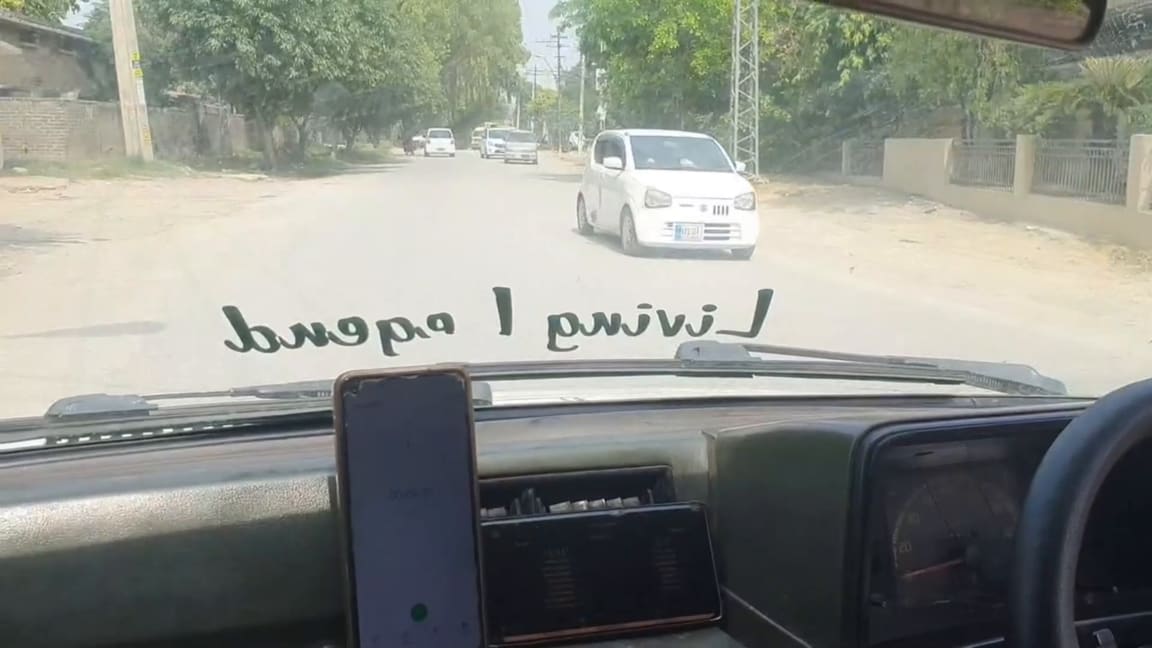
The problem
An existing petrol car can be turned into a plug-in hybrid without buying a new one. The project asked what a conversion kit would need. The test car was a 1985 Daihatsu Charade G11 with a 1.0 L petrol engine.
What I built
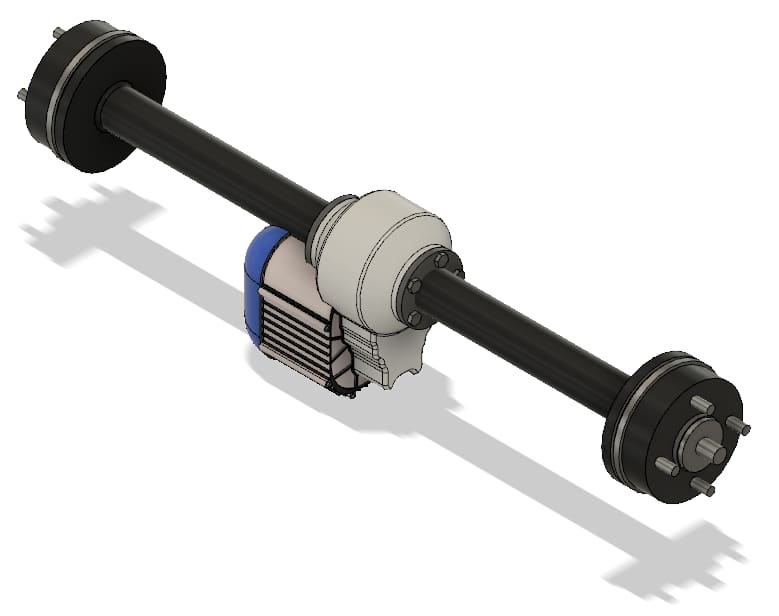
The petrol engine stays and keeps driving the front wheels. We added an electric drive on the rear axle: a brushless DC motor, 1.5 kW continuous, coupled to the differential of a donor three-wheeler axle by a machined coupler, and a lithium-ion pack of about 60 V. Because the engine and the motor share no shaft and each drives its own axle, it is a through-the-road parallel hybrid. In electric mode the car is rear-wheel drive. With the engine running as well, all four wheels are driven.
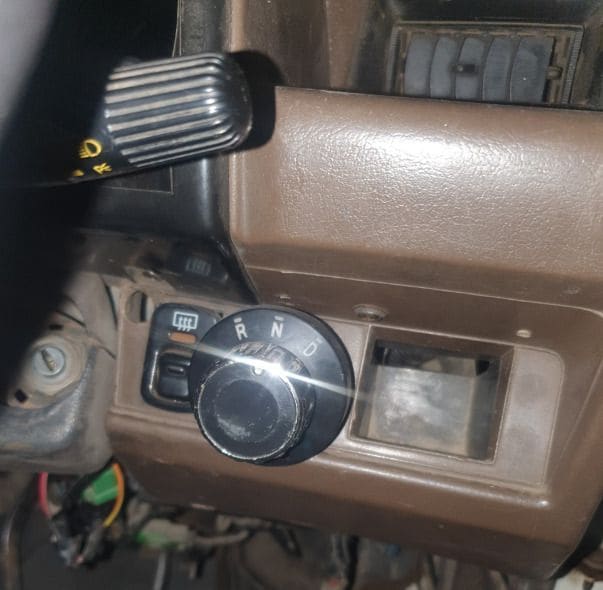
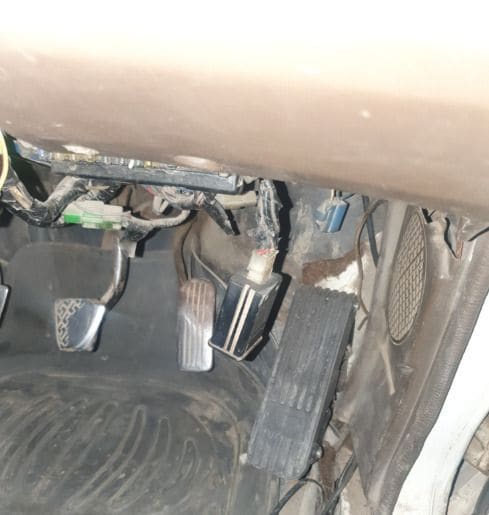
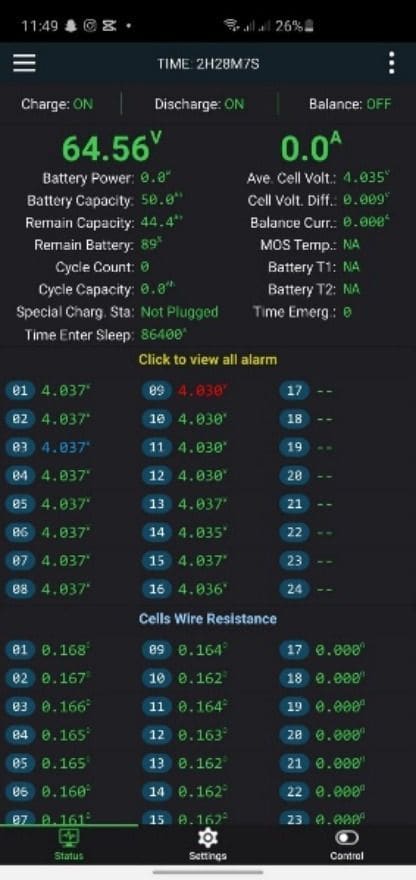
The pack charges from any 230 V socket through an onboard charger, and from one 180 W roof panel through a boost charge controller. A JK-BMS shows every cell's voltage on a phone. The driver picks electric drive, neutral or reverse on a rotary switch on the column, and uses an added electric throttle pedal.
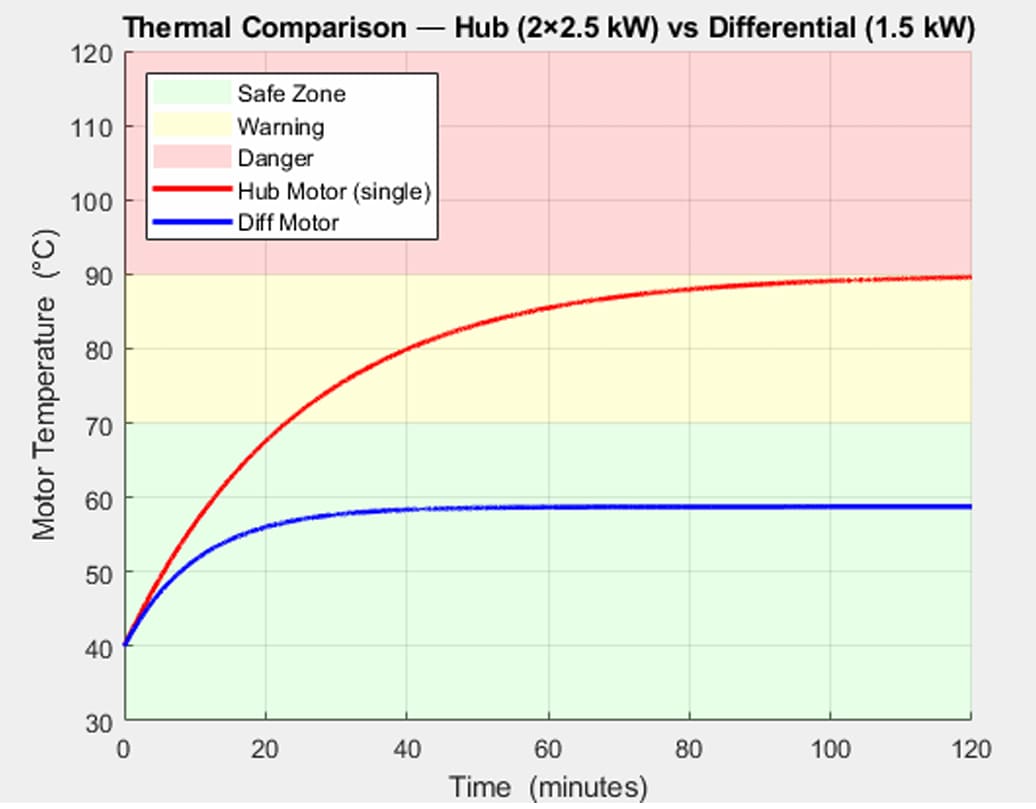
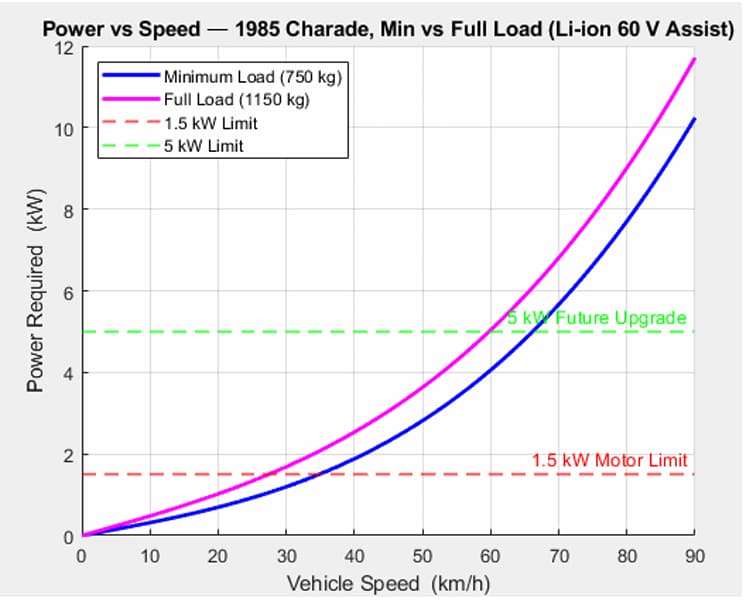
Before building, we compared two hub motors with one motor on a differential, scoring thermal safety, effect on handling, installation effort and cost. Hub motors add weight in the wheel and run hot, so the differential won. Simulations in MATLAB covered the power needed against speed, motor temperature and range.
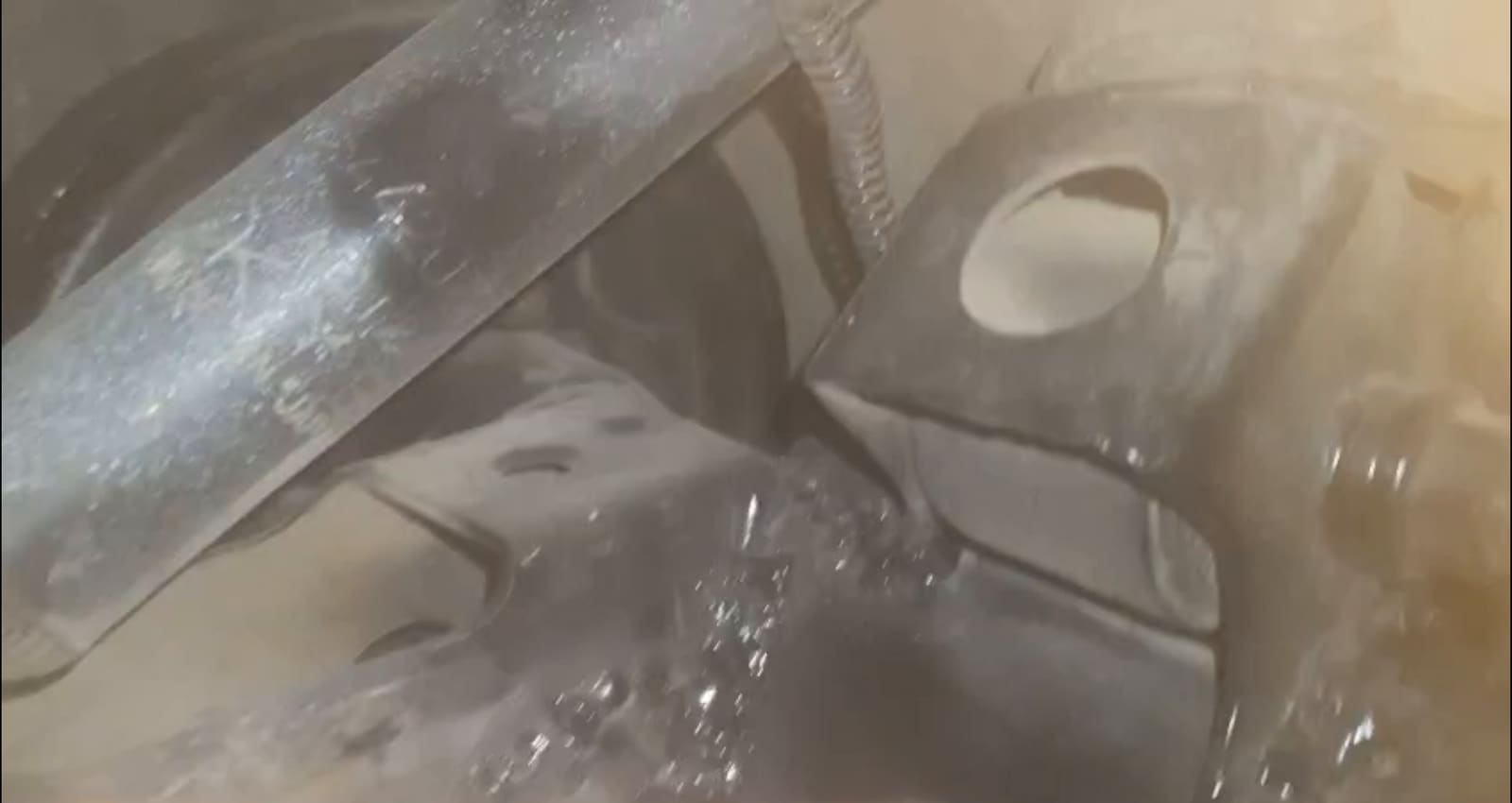
The donor axle was narrower than the Charade's track, so we widened it to the 1,310 mm rear track with a lathe-turned 121 mm sleeve, TIG welded, and tied it to the chassis with new brackets on rubber bushings. The car's own springs and dampers stay in use.
The hard part
Alignment. The motor, coupler and differential had to line up on a 1985 chassis, which meant reworking the axle mounting and dampers, as the video shows. Early runs had a slight vibration at certain speeds, which we fixed by fine-tuning the coupler balance.
Throttle surge. Starting the engine while pressing the electric pedal hard made the two power sources overlap in a surge. The fix was a smoother throttle ramp in the controller, plus easing off the pedal when the engine comes in. Reverse speed is capped at about 10 km/h.
The result
On a 5% ramp the motor managed, but the current peaked near 80 A, so steeper hills are for the engine. The pack charges in about 5.5 hours from a normal 230 V socket.
Modelled, under favourable assumptions: about 21 km from the battery, plus roughly 5 to 6 km a day from the panel in good sun, so about 27 km a day. The report itself calls these figures extrapolated.
Simulation: in a 2-hour stop-and-go cycle at 40 °C ambient, the motor on the differential stays under 65 °C. A hub motor was estimated at about 90 °C.
Source: ReSurge final report, May 2025, pp. 27 to 28, and the project preview video
Limits. The range, the temperatures and the power curves are models, not measurements. The pack was the weakest link: its voltage sagged from about 62 V to about 55 V at 80 A, which slightly cut top speed near the end of a charge.
What we would do differently
A better battery, because the pack was the weakest link. Regenerative braking, which the controller supports but we did not enable. Automatic coordination of the engine and the motor, instead of the driver managing both. And a bolt-in axle kit made for each car model, so fitting does not need custom fabrication every time.
case file
How it works.
- A solar panel and a plug-in charger fill the battery pack.
- The pack feeds the motor controller through a fuse and contactor. The throttle pedal and the R-N-D switch tell the controller what to do.
- The controller drives the motor, which turns the rear axle through a custom coupler and the differential.
- A battery management system reports the pack to a phone app, and a DC-DC converter keeps the 12 volt system topped up.
- The petrol engine drives the front wheels on its own. The two axles share nothing but the road.
- Drawn from the project report and the build photos.
- Range numbers are modelled. The rest is the car as built.
Want to talk?
Email hello@arsalmurad.com or book 20 minutes, and tell me what you're working on.